


Frequency in Shamanic Techno
When techno uses shamanic elements, it may be called Tribal Techno, Ritual Techno, or Psychoshamanism. In this style, “frequency” has a wider meaning.
Producers in this style match sound frequencies and rhythms with older ritual practices. They aim to support trance, meditation, or altered states of awareness.
Shamanic techno can be understood through three main types of frequency:
1. Rhythmic Frequency (Entrainment and Brainwave States)
Traditional shamanic drumming uses repeated rhythms that can make brainwaves follow the beat. Shamanic techno adapts this idea to modern tempos:
- The Theta Rhythm (4 – 8 Hz): In neurology, theta brainwaves represent a deeply meditative, dreamlike state associated with shamanic journeys. To trigger this, traditional shamans drum at roughly 3.5 to 4.5 beats per second (equivalent to ~210–220 BPM).
- The Techno Adaptation (110 – 135 BPM): Because 220 BPM is too fast for standard club dancing, shamanic techno producers solve this by half-stepping or using specific polyrhythms. They will run a dark, hypnotic techno beat at a slower 110 to 132 BPM, but layer rapid tribal percussion, shakers, and rattles on top that pulse at that exact 4 Hz micro-frequency to guide the brain into trance.
- Feelings of Unity: Peer-reviewed neurological research published in Frontiers in Human Neuroscience explored electronic music tempos and found that slower, steady electronic rhythms (specifically around 1.65 Hz / ~100 BPM) statistically aroused significantly stronger feelings of cosmic "unity" and connectedness in listeners compared to faster, aggressive tempos.
2. Tuning Frequencies (The Solfeggio Scale)
Standard club techno usually uses the Western A=440 Hz tuning. Shamanic electronic music may use other tunings that some producers connect with healing or spiritual ideas:
- 432 Hz Tuning: Known as the "natural frequency of the universe" or "Verdi tuning," entire shamanic techno tracks are often pitched down slightly to A=432 Hz. Listeners and producers describe this tuning as sounding "warmer," more grounded, and less fatiguing to the nervous system when blasted through club speakers.
- 528 Hz (The Transformation Frequency): Synths, drone pads, and ancient wind instruments (like the didgeridoo or native flutes) used in these tracks are often tuned precisely to 528 Hz, a Solfeggio frequency historically associated with cellular repair and anxiety relief.
- 396 Hz & 741 Hz: Deeper ritual sets sometimes open with 396 Hz drones, linked to releasing fear and grounding the body, and build toward 741 Hz textures, associated with clarity and awakening intuition, mirroring the arc of a ceremony.
3. Integrated Binaural Frequencies
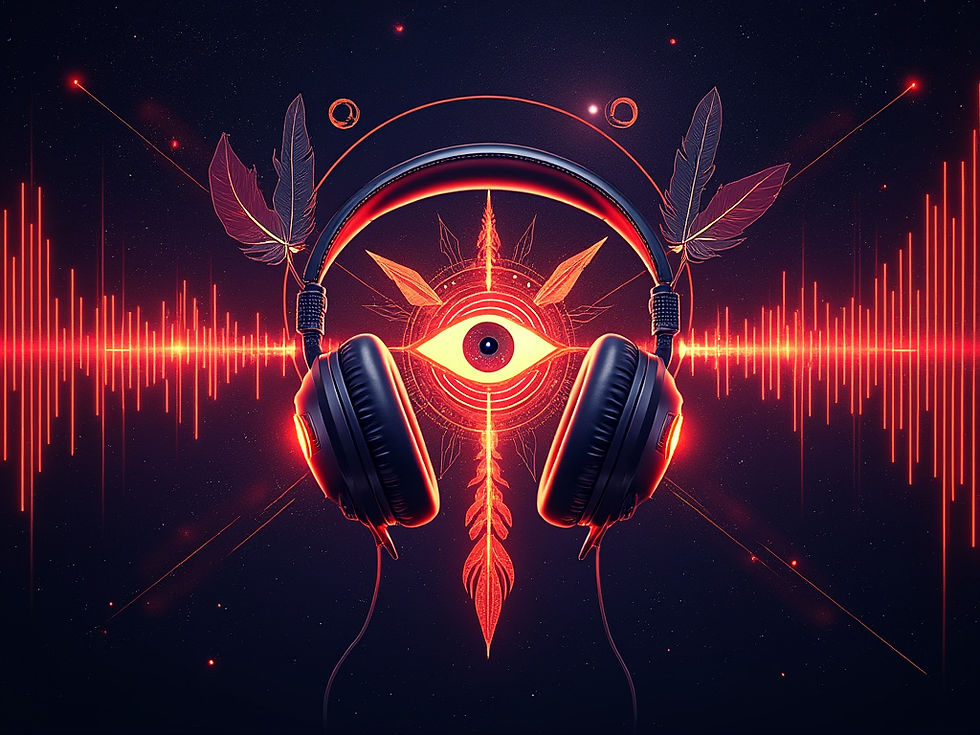
• Producers may add binaural beats to the sub-bass to strengthen the shamanic feeling.
• For example, the left headphone may play 90 Hz while the right plays 95 Hz.
• You hear one pulsing effect because the brain processes the 5 Hz difference.
• This works best with headphones because each ear needs a separate sound. Clubs may use isochronic pulses or rhythmic gating instead.
Notable Shamanic & Ritual Techno Artists
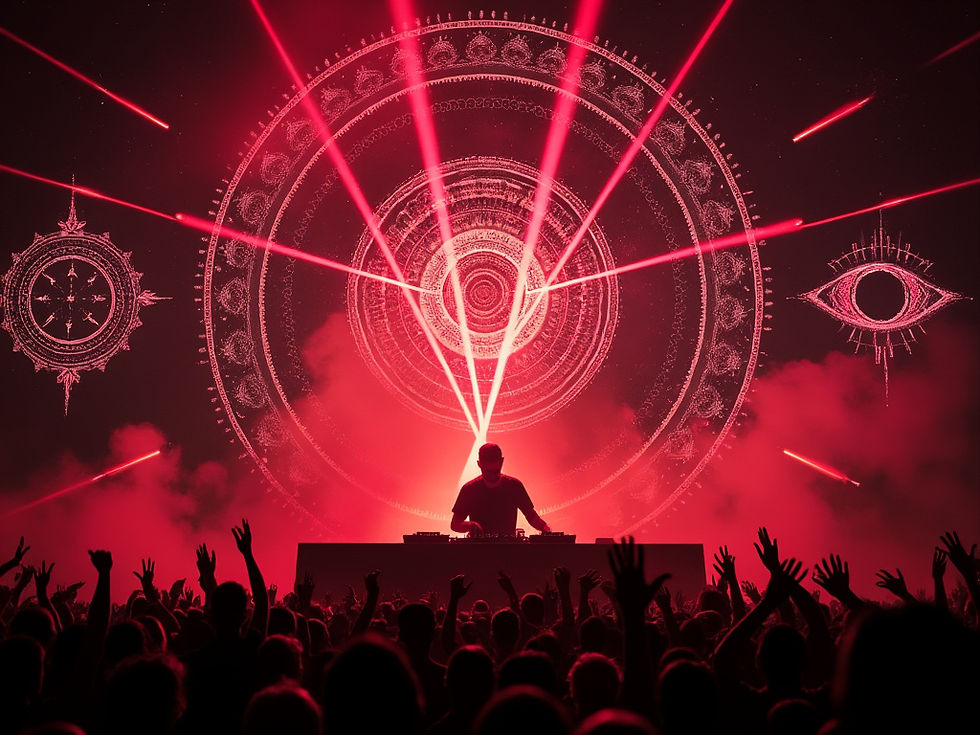
People in forums such as r/Techno on Reddit often recommend certain artists for listeners who want to explore this style:
• Shaman’s Path is often described as deeply ritualistic and hypnotic techno. Its “Sacred Industrial” sessions use a slow 110 BPM rhythm, tribal drums, throat-singing textures, and deep sub-bass.
• Other artists make slow, evolving techno with long meditative sets, drones, and organic percussion. The linked DrumCode material may help you find more artists.